
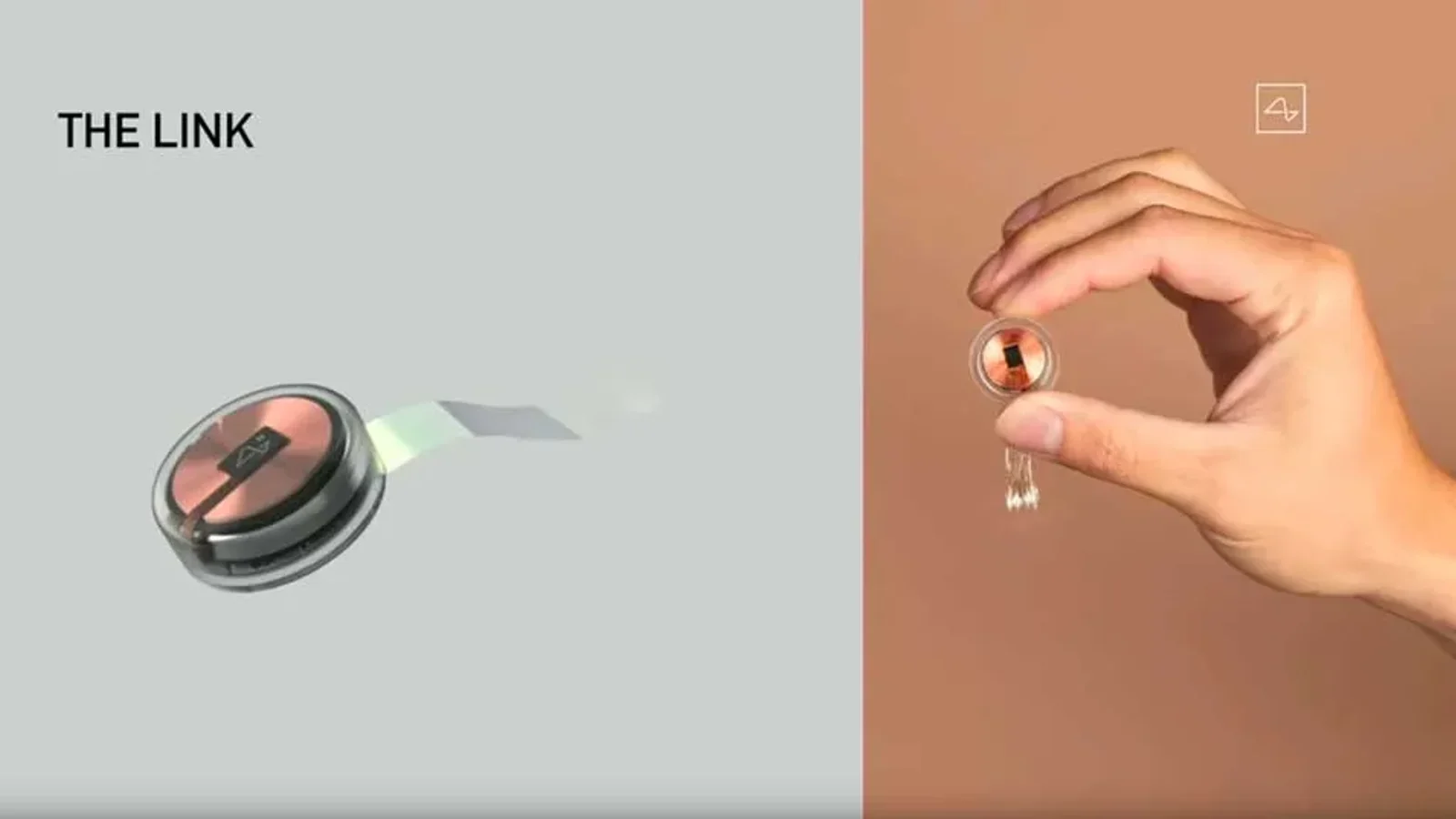
Neuralink's early live demonstration showed that an implanted device could transmit neural activity wirelessly, but it did not establish a finished treatment or a guaranteed outcome for people with paralysis. The useful takeaway is the engineering direction and the questions it raised about safety, clinical evidence, access, and the difference between a research milestone and an approved medical device.
In a live demonstration, Elon Musk revealed that Neuralink has successfully installed a working brain-to-machine interface inside a pig. Elon Musk's brain-hacking company Neuralink demonstrated a working brain-to-machine interface in a live demonstration on August 28th.
The device, called The Link, is a small coin-sized chip that is implanted in the skull. It contains 1,024 electrodes and can detect neural spikes — tiny electrical pulses generated when neurons fire. The data is transmitted wirelessly to an external device.
Musk showed a pig named Gertrude with the device implanted, and the audience could see real-time neural activity on a screen as Gertrude sniffed around a pen. The spikes corresponded to activity in the part of the brain that controls the snout.
"It's kind of like a Fitbit in your skull with tiny wires," Musk said during the demonstration.
Neuralink was founded in 2016 and has been working quietly toward a human trial. The company received FDA Breakthrough Device designation in 2019. Musk said the company hopes to begin human trials soon, pending FDA approval.
The initial applications for humans are focused on medical use: helping people with paralysis control computers and mobile devices directly with their thoughts. Longer term, Musk envisions applications that could restore sensory function and eventually enable a kind of symbiosis between human intelligence and artificial intelligence.
The implantation procedure is performed by a surgical robot that Neuralink has also developed. The robot can insert the thin, flexible electrode threads — each thinner than a human hair — with high precision, avoiding blood vessels.
Some neuroscientists have expressed skepticism about the timeline and scope of Musk's ambitions. Others note that the technology, while impressive, is an incremental advance on existing brain-computer interface research that has been going on in academic labs for decades.
For people with spinal cord injuries or other conditions that prevent them from controlling their limbs, brain-computer interfaces represent a potentially transformative technology. Several research groups have already demonstrated that humans with paralysis can control robotic arms, type on computers, and even control their own paralyzed limbs using BCIs.
Neuralink's approach differs from earlier systems primarily in scale — the 1,024 electrodes represent a significant increase over previous implants — and in the wireless, fully implanted design that eliminates the need for wires passing through the skull.
Whether the company can translate this into a practical, FDA-approved medical device on the timeline Musk has suggested remains to be seen. But the demonstration represented a significant public milestone for a company that has operated largely in secrecy since its founding.
What changed after the demonstration
The original article describes a preclinical demonstration. Neuralink later published an official PRIME Study progress update about its first human implantation and the design of its current system. That later update does not turn every earlier ambition into a proven benefit. It provides a better source for the company's present claims, study stage, device design, and explicit statement that participation does not guarantee a benefit.
Why brain-computer interfaces matter
Brain-computer interfaces may eventually offer new ways to control digital tools or assistive systems, which is why the field matters to the wider conversation about movement and independence. The path from recorded signals to dependable daily use is complex. Surgery, calibration, long-term reliability, software, training, support, and equitable access all affect whether a laboratory capability becomes useful outside a study.
Keep experimental technology in context
Moove shares this story as technology news, not as medical guidance or a recommendation for an implant. Current mobility decisions should still be based on available, supportable options and individual goals. Explore Moove's fitting approach for present-day equipment decisions in Canada, or use the contact form to ask a practical mobility question. Clinical questions belong with qualified health professionals and the study team.